Eclipse Reads: Book of the Month
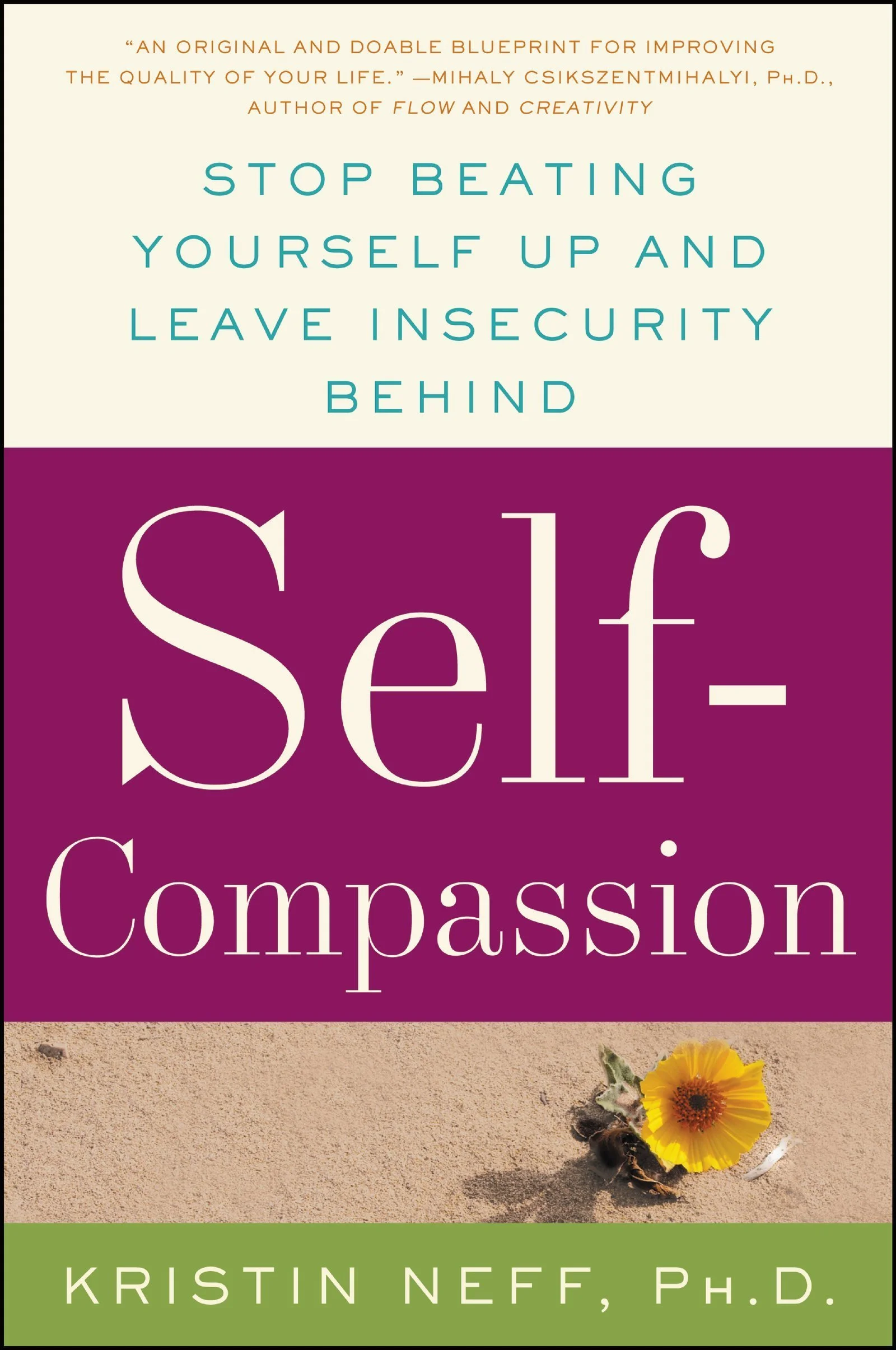
Self-Compassion: The Proven Power of Being Kind to Yourself by Dr. Kristin Neff
Written by Erin Smith
As a psychologist, there are certain books I find myself returning to again and again—not because they offer a new therapeutic technique or a groundbreaking theory, but because they articulate something important about being human. Self-Compassion: The Proven Power of Being Kind to Yourself by Dr. Kristin Neff is one of those books.
Originally published in 2011, this book has become a cornerstone in conversations about emotional wellbeing, resilience, and mental health. Yet despite its popularity, I continue to encounter clients who are unfamiliar with the concept of self-compassion or who dismiss it as self-indulgent, self-pitying, or simply unrealistic. Neff's work challenges these assumptions with a blend of research, personal storytelling, and practical exercises that make the science of self-compassion both accessible and personal.
Neff organizes self-compassion into three core components: self-kindness, common humanity, and mindfulness. While these concepts may sound simple, their application can be challenging. Many readers, myself included, may recognize themselves in the examples of perfectionism, shame, overachievement, and relentless self-judgment that appear throughout the book.
As a psychologist, I've found that one of the most powerful shifts a person can experience is the realization that you do not have to earn compassion. You do not have to become more successful, more productive, or more emotionally intelligent before you deserve kindness—from others or from yourself. This book articulates that idea with both scientific rigor and emotional depth.
Why This Book Resonates
One of the reasons this book continues to be influential is that it addresses a universal struggle: our tendency to be far harsher with ourselves than we would ever be with someone we love. Neff argues that many of us have been taught to believe that self-criticism is necessary for motivation, achievement, and personal growth. We tell ourselves that if we're too kind to ourselves, we'll become complacent or weak. However, decades of research suggest the opposite. Individuals who practice self-compassion tend to be more emotionally resilient, less anxious and depressed, and better able to recover from life’s inevitable setbacks.
The Most Useful Part: Practical Strategies
Although the research presented throughout the book is valuable, the sections I return to most often are the practical exercises. Neff provides readers with concrete strategies for developing self-compassion in daily life. These include guided reflections, journaling exercises, mindfulness practices, and techniques for identifying and challenging one's inner critic. Unlike many self-help interventions that emphasize positive thinking or affirmations, these exercises acknowledge emotional pain rather than attempting to suppress or avoid it.
One particularly powerful exercise invites readers to consider how they would respond to a close friend experiencing the same struggle they are facing themselves. It sounds simple, yet it often reveals the profound discrepancy between how we treat others and how we treat ourselves. I have adapted variations of this exercise in clinical practice for years. Time and again, clients discover that they possess enormous compassion, wisdom, and patience—just not when they are directing those qualities inward.
Another valuable aspect of the book is Neff's discussion of motivation. Many high-achieving individuals fear that self-compassion will diminish their drive or ambition. Neff carefully dismantles this misconception by explaining that harsh self-criticism often leads to avoidance, shame, and burnout, whereas self-compassion creates the opportunity for learning and growth. In an era characterized by constant comparison, productivity culture, and social media-driven perfectionism, this message feels more relevant than ever.
What the Book Does Not Do
One of the strengths of Self-Compassion is that it does not promise transformation overnight. This is not a book that offers quick fixes, simplistic positivity, or a formula for happiness. Readers looking for a highly structured treatment manual or a rigid self-improvement program may find themselves frustrated. The book also asks readers to confront a difficult truth: many of our beliefs about worthiness, success, and self-acceptance were learned early in life and reinforced over decades. Changing these patterns is challenging, gradual, and often uncomfortable.
While Neff’s willingness to draw candidly from her own life gives her writing a deeply authentic resonance, some readers may find certain topics emotionally challenging or controversial. In particular, her open discussion of her personal marital struggles and the complex realities of parenting an autistic child offer a raw perspective that may trigger strong emotional responses or spark debate depending on the reader's own lived experiences.
Some readers may also be skeptical of the book's emphasis on mindfulness and contemplative practices. I know from speaking with some of my clients that mindfulness is sometimes perceived as "doing nothing," a form of pseudoscientific "mumbo jumbo," or tied to alternative religious and cult practices. While science has and continues to work towards validating the mental health benefits of mindfulness, for individuals who are accustomed to solving problems through action and achievement, slowing down and acknowledging emotional suffering can feel counterintuitive.
Final Thoughts
There are many excellent books on mental health, resilience, and personal growth, but few have had the lasting impact of Self-Compassion. Neff succeeds in translating complex psychological research into a message that is both scientifically grounded and profoundly human.
As a psychologist, I recommend this book frequently—not because I believe self-compassion is a cure-all, but because I believe it addresses a foundational aspect of psychological wellbeing that many of us overlook. We spend enormous amounts of energy trying to change our thoughts, improve our habits, and fix our perceived shortcomings. Far less often do we ask whether we are treating ourselves with the same kindness we extend to others.
For readers who struggle with perfectionism, anxiety, shame, or burnout, Self-Compassion offers something increasingly rare: permission to stop fighting yourself. And sometimes, that permission is where healing begins.